


Purpose and risk notice: No strategy, this website or its author guarantees a win, profit or any particular result. This is an explanation of spending, exposure and risk decisions, not instructions for winning or recovering losses. You can lose money under every approach discussed here.
What a Tower Rush strategy can control
A tower rush strategy can determine how much you expose to a new round and when you stop entering rounds, but it cannot choose the server's outcome.
For players in Pakistan, separate the spending decision made before a stake is accepted from the result recorded after settlement.
Original Tower Rush uses an individual Build sequence. Cashout becomes available after a successful floor. One accepted round has one initial stake debit; continuing to build does not create a separate original bet on every floor. There is no shared flight, second betting panel or automatic cashout target in this profile.
The real-money PKR profile allows stakes from PKR 27 to PKR 36,000 in PKR 0.50 steps, with a PKR 3,150,000 gross payout cap. Its configured RTP is 97%. These are game parameters, not a personal budget. Having room below a game limit does not make the next stake affordable for you.
Fixed stakes and doubling in the same risk model
Fixed stakes produced a smaller average loss than doubling in this model, with both averages negative under the same starting balance and stopping rules.
The model assumptions
I calculated 24,000 runs for each policy using a standalone two-outcome model: a gross return of 2× the stake with probability 0.485, or zero with probability 0.515. The expected return is 97% of accepted stakes. This is a risk illustration, not a reconstruction of Tower Rush's game mathematics.
Every run starts with PKR 6,600 and a base stake of PKR 50. The fixed policy repeats that stake. The doubling policy doubles after a loss and resets to PKR 50 after success. This is the definition of the policy tested, not a recommendation to follow it.
Each run has at most 90 cycles. Net-result thresholds of minus PKR 1,800 and plus PKR 1,800 are checked after settlement, and a PKR 36,000 stake cap applies. If the next stake is unaffordable, the run stops before debit. The balance never becomes negative through an imaginary unfunded bet.
For one accepted stake, expected net is (0.485 × 2 − 1) × stake. This equals minus 3%. A PKR 50 stake therefore has an expected net result of minus PKR 1.50. That average across possible outcomes is neither an extra fee nor a prediction of one round.
Average results and outcome quantiles
Doubling increased average turnover from PKR 4,499.88 to PKR 8,861.71, alongside an increase in average loss from PKR 136.86 to PKR 270.43.
Turnover counts all stakes placed, including money reused during play, so it can exceed the starting bankroll without representing either fresh deposits or the amount lost.
| Policy | Mean net | Mean turnover | 5th-percentile net | Median net | 95th-percentile net |
|---|---|---|---|---|---|
| Fixed PKR 50 stake | −136.86 | 4,499.88 | −900 | −100 | +600 |
| Double after a loss | −270.43 | 8,861.71 | −3,150 | +1,800 | +1,800 |
The quantiles use linear interpolation at position (N − 1)p in the ordered results. The median is the distribution's middle. The 5th and 95th percentiles describe its lower and upper regions. None promises a personal outcome, and the interval between them does not contain every possible loss.
The doubling policy's positive median does not contradict its negative mean. Many runs stopped at the profit threshold, while damaging loss sequences pulled the average below zero. Looking only at how often a run ends ahead conceals how much can be lost when it does not.
| Stop reason | Fixed stake runs | Doubling runs |
|---|---|---|
| Cycle limit | 23,989 | 92 |
| Loss threshold after settlement | 10 | 10,890 |
| Profit threshold after settlement | 1 | 13,018 |
| Total | 24,000 | 24,000 |
The fixed policy usually reached the cycle limit because each debit was small relative to the monetary thresholds, whereas doubling more often ended at a profit or loss boundary.
A quicker ending alone does not show that less money was exposed or lost.
Why zero observed ruin does not mean safety
Neither policy produced ruin in these 24,000 runs. Here, ruin means a balance below PKR 27. A failed profit target or a triggered loss stop does not qualify. Consequently, the model records no ruin alongside thousands of substantial losses.
With zero events, the one-sided 95% upper bound for the model's ruin probability is 0.012481%. That statistical bound belongs to these assumptions and runs. It is not a guarantee of safety, a measured real-game probability or evidence that a larger sample could never contain a ruin event.
Judging doubling by its attractive median alone hides the greater turnover, negative mean and worse lower quantile that describe its cost and downside.
Why a doubling sequence runs out of room
A doubling sequence can demand more than the remaining balance even when its next stake fits the game's maximum.
The loss ladder below starts with PKR 6,600, separating basic affordability from the stop rule that ends the actual model before the bankroll is exhausted.
Cumulative losses and the next affordable stake
Each loss increases the proposed next stake. After five consecutive losses, PKR 1,550 has gone. The remaining PKR 5,050 can fund a sixth stake of PKR 1,600. Accepting it exposes enough to cross the PKR 1,800 loss boundary in one settlement.
| Next step | Proposed stake, PKR | Prior losses, PKR | Balance before step, PKR | Affordability and stop status |
|---|---|---|---|---|
| 1 | 50 | 0 | 6,600 | Affordable; no stop reached |
| 2 | 100 | 50 | 6,550 | Affordable; no stop reached |
| 3 | 200 | 150 | 6,450 | Affordable; no stop reached |
| 4 | 400 | 350 | 6,250 | Affordable; no stop reached |
| 5 | 800 | 750 | 5,850 | Affordable; no stop reached |
| 6 | 1,600 | 1,550 | 5,050 | Affordable before settlement |
| 7 | 3,200 | 3,150 | 3,450 | Affordable in isolation; model already stopped |
| 8 | 6,400 | 6,350 | 250 | Unaffordable; hypothetical only if earlier stop ignored |
The seventh stake is not placed by this model after six losses. Its row shows why “I still have enough for another bet” differs from following a stop rule. The eighth row extends the arithmetic solely to demonstrate insufficient funds; it is not an executed path or an instruction to keep doubling.
Stopping after settlement can overshoot the threshold
The loss stop corresponds to a balance of PKR 4,800 or less, and the profit stop to PKR 8,400 or more, with both tested after an accepted bet settles.
Neither boundary partially settles a losing bet or refunds exposure beyond the chosen threshold.
After the sixth consecutive loss, cumulative losses are PKR 3,150 and the balance is PKR 3,450. The model stops there, rather than at a loss of exactly PKR 1,800. This overshoot explains the doubling policy's minus PKR 3,150 lower quantile without requiring a negative balance or an extra seventh loss.
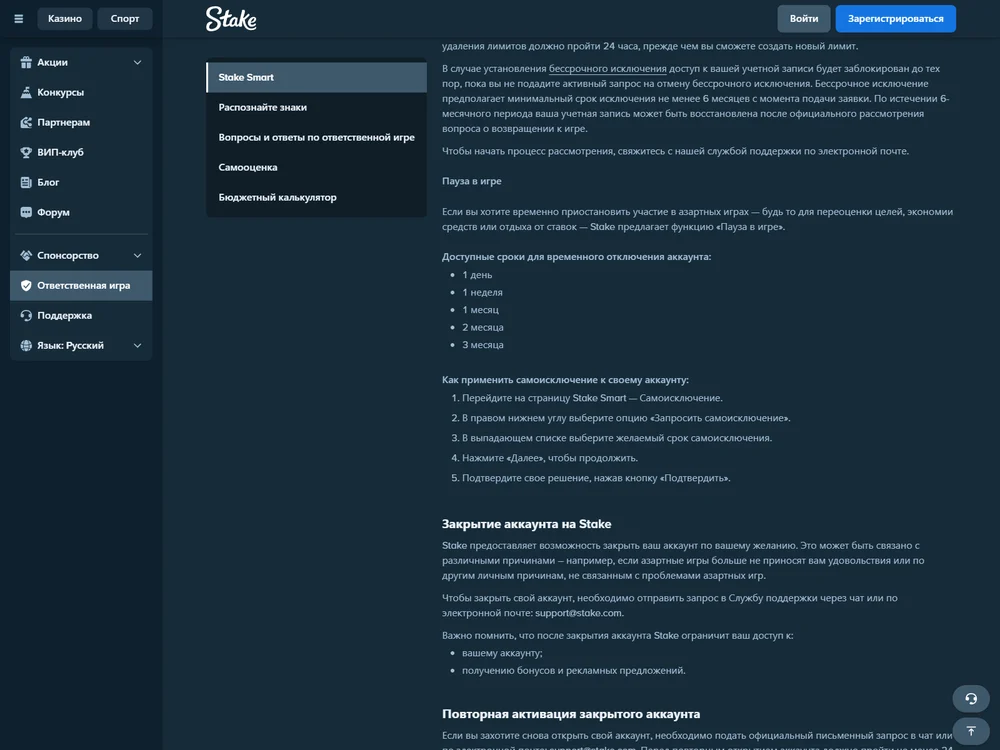
Keep a personal limit fixed during a losing sequence; the responsible-gambling controls explain ways to restrict access and obtain help when stopping becomes difficult.
Pace changes turnover and spending exposure
A time limit and breaks reduce the number of opportunities to place bets, but they do not improve the expected return of an accepted stake. The separate calculation below illustrates pacing with explicit assumptions. It is neither an observed Tower Rush speed nor a recommended session budget.
| Input or calculation | Result |
|---|---|
| Total period | 35 minutes |
| Break time | 5 minutes |
| Active time | 30 minutes = 1,800 seconds |
| Assumed cycle duration | 25 seconds |
| Whole cycle opportunities | floor(1,800 ÷ 25) = 72 |
| Bets at 80% participation | floor(72 × 0.80) = 57 |
| Turnover | 57 × PKR 50 = PKR 2,850 |
Under this illustration, reaching 35 minutes or the PKR 1,800 loss threshold blocks another entry. The PKR 2,850 turnover is accumulated exposure, not a predicted loss. A break changes the number of available decisions; it does not reset probabilities or make the following result more favourable.
Read game results without treating them as forecasts
A short profitable session does not establish a profitable strategy. My demo test contained 25 accepted rounds: one void and 24 settled. The settled comparison accounts for 363 FUN in stakes and 652 FUN gross returned, leaving a 289 FUN profit and a balance movement from 2,200 to 2,489 FUN.
The sample's gross-return ratio was 179.614325%. That is not the configured RTP or a forecast for cash play. Among the settled results, 19 had positive gross. Only 17 generated a net gain and two broke even, so counting every payout as a winning round would blur distinct measures.
The same demo sequence had a maximum drawdown of 61.50 FUN and a longest run of three zero-gross outcomes. Those observations describe that sample. FUN is demo currency, and neither its balance nor a favourable sequence transfers to a real-money account or predicts the next Build.
Read the server-confirmed settlement. A pending round is unresolved. A void refund is not a win. If the connection drops, check the existing round's result before another stake; an animation or a missing screen update is not a final balance entry.
Frozen protection forms part of the final gross payout, not a second award added afterwards. A maximum-win warning also matters: continuing beyond the payout cap cannot increase the payable amount and can put the accumulated result at risk. The game features explain these mechanics without turning them into profit guarantees.
Set a spending boundary before another round
For tower rush bankroll management, first separate any amount you can afford to lose from money needed for bills or other commitments.
A loss limit is a stopping decision, not a target to win back.
- Check your available cash balance and choose a spending boundary before entering a round.
- Check the full proposed stake against that balance and boundary. A game accepting the amount does not make it personally affordable.
- Set a time boundary and include breaks. Stop entering new rounds when either your spending or time limit is reached.
- Wait for settlement, then read gross, net and remaining balance. Resolve a pending or disconnected round before another entry.
- End the session when the boundary is reached. Do not raise the stake, add funds or extend the session to recover losses.
Fixed stakes limit each debit; they do not guarantee profit. This standalone model left both policies with negative averages, and doubling increased turnover and downside. Stop rules control the next exposure after settlement, so their limits can overshoot. These are risk boundaries, not a winning system.
Read the Tower Rush RTP explanation to distinguish long-run return from session results. If a service promises a predictable floor, guaranteed recovery or a winning signal, check the predictor-scam guide before trusting that claim.
Tower Rush strategy for understanding stake risk
FAQ
Can any Tower Rush strategy guarantee profit?
No. Stake choices, breaks and stop rules can change spending exposure, but they cannot guarantee a win or control the game's server outcome. Both stake policies in the standalone model had negative average results.
Is the 97% model a calculation of Tower Rush's floors?
No. It is a separate two-outcome model paying 2× gross with probability 0.485 or zero with probability 0.515. It compares stake-policy risk and must not be used to predict floors or cashout results.
Why did doubling have a positive median but a negative mean?
Many runs reached the profit stop, placing the median at plus PKR 1,800. Larger losses in other runs pulled the mean to minus PKR 270.43. Frequency of profitable endings and the size of losses are different measures.
Does a PKR 1,800 loss stop cap every model loss at that amount?
No. It is checked after settlement. Six consecutive doubling losses total PKR 3,150, so the run stops at a PKR 3,450 balance. The seventh stake is blocked even though it would fit that balance in isolation.
Does zero ruin in 24,000 runs prove that a policy is safe?
No. Ruin means a balance below PKR 27 in this model, not any substantial loss. Zero observed events still gives a nonzero statistical upper bound and does not establish a real-game safety guarantee.
Do breaks improve the chance of the next result?
No. Breaks reduce active time and the number of betting opportunities. They do not change the expected return of an accepted stake or make a win due after a losing sequence.
Should a pending round count as a loss in my balance check?
No. Wait for its settlement and reconcile the existing round. Do not place a replacement stake to compensate for an unresolved result. A void refund also differs from a winning payout.

Abid Bilawal
Author: Abid Bilawal
Role: iGaming, betting and gambling expert
Experience: 10+ years analysing online casinos, game providers, games and payment systems
Published: November 6, 2026
Device: Google Pixel 10a / Android 16 / Pixel UI
Additional device: iPhone 16 / iOS 26.5
Methodology: Methodology
Publisher and licensing
Tower Rush Pakistan is an informational publisher about the original Tower Rush by Galaxsys. The publisher does not accept bets, hold operator funds, create casino accounts or promise returns. The game provider, casino operators and publisher are separate entities. Third-party trademarks belong to their respective owners.
Responsible gambling
Play responsibly. Gambling involves financial and personal risks. Set your limits. Need help? Contact GamCare or visit GambleAware. 18+.